Controlled AI. Real results.
Map darknet context under governance
Darknet collection becomes useful when it is governed and every finding stays connected to the case – with darknet search, an isolated Tor browser and analysis of the Tor relay network.
Product view
Map marketplaces, vendors and indicators without losing governance
Darknet findings become useful when onion services, vendors, accounts, wallets, domains and artifacts are connected under policy instead of treated as unmanaged browsing.
Collection
Authorized source paths and governed tools
Entities
Marketplaces, vendors, handles, wallets and domains
Artifacts
Captured outputs with source and case context
Briefing
Reviewed threat context with clear limits
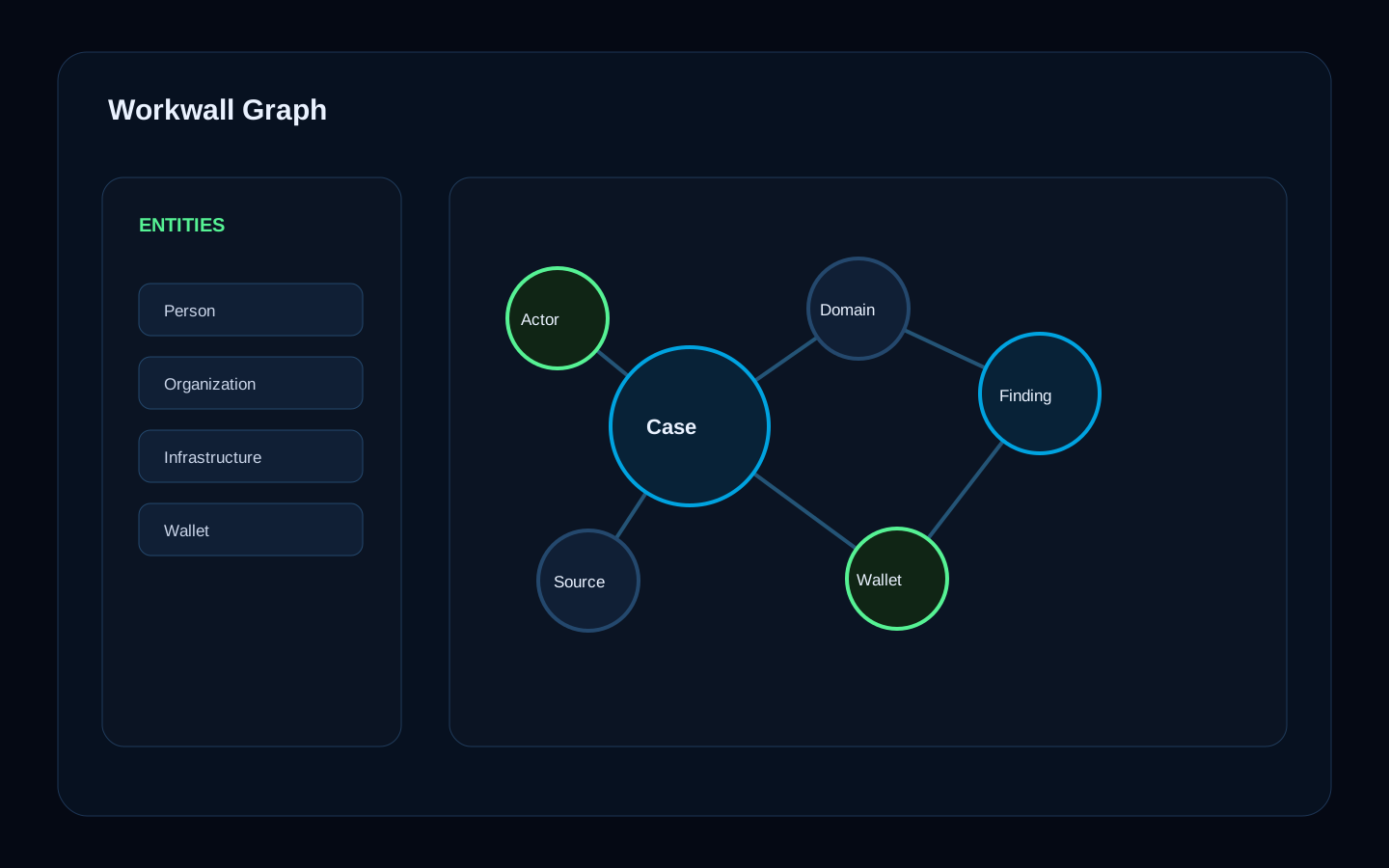
CASE GRAPH
Findings become connected context
What threat intel teams get back
Governed collection
Keep dark web work inside approved case, source and role boundaries.
Connected marketplace context
Represent vendors, services, indicators, wallets and domains as related findings.
Evidence preservation
Attach relevant outputs and analyst notes to the case instead of screenshots scattered across folders.
Defensible briefings
Produce threat context that states what was observed, what is uncertain and what was reviewed.
Where darknet research becomes hard to defend
Dark web work can produce useful signals, but unmanaged browsing, copied screenshots and disconnected notes are difficult to review or reuse.
Arqent wraps the workflow in governance. Collection, mapping, evidence capture and briefing happen in the case context, with clear boundaries around sources and claims.
SOURCE PATH
Controlled collection
Authorized dark web capabilities run within case and policy boundaries.
RELATIONS
Entity mapping
Marketplaces, vendors, accounts, wallets and domains can be represented as connected nodes.
ARTIFACTS
Evidence capture
Relevant outputs stay attached to the case for review and reporting.
OUTPUT
Threat package
Analysts can create a defensible threat package from reviewed findings.
Use cases
Darknet mapping workflow
Use this pattern when marketplace, vendor or actor context must be collected, correlated and packaged without losing source discipline.
Threat intelligence
Darknet intelligence
Find and map onion services, marketplaces, vendors and indicators – with darknet search, an isolated Tor browser and analysis of the Tor relay network. Collection stays governed, and every artifact stays attached to the case.
Explore workflowSystems and sources
What the operator does
Results
Product view
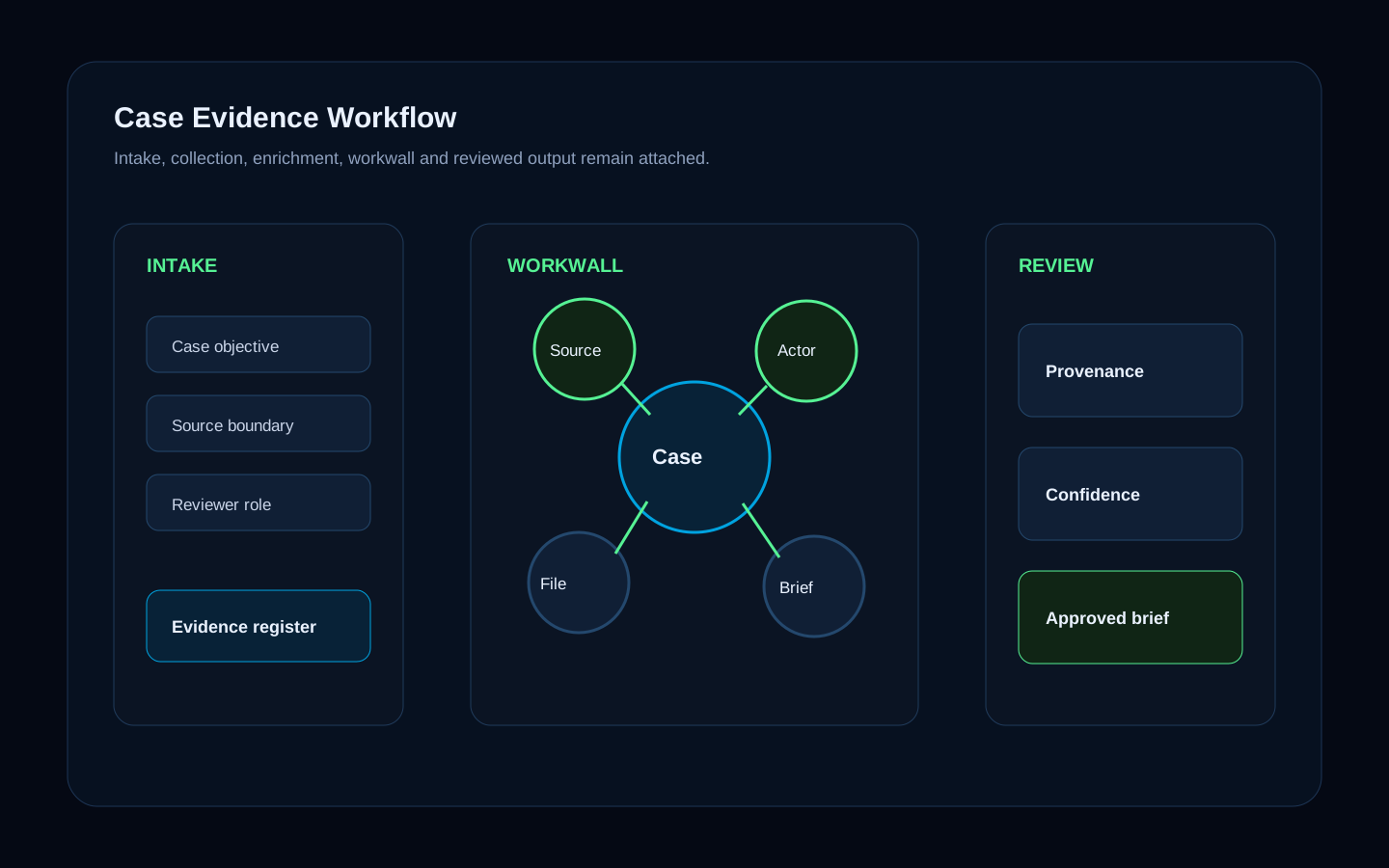
Keep collection outputs tied to the case record
Every relevant artifact, tool result, relation and reviewer note can remain attached to the investigation so the final threat briefing is traceable.
Request
Marketplace, vendor, onion or indicator question
Run
Governed collection and enrichment capability
Review
Source notes, confidence and relevance checks
Output
Threat briefing with evidence artifacts
EVIDENCE TRAIL
Every result stays linked to its sources
Trust model
Built for dark web source discipline
Darknet workflows need strong boundaries around collection, artifacts, claims and sharing.
Source governance
Separate approved collection workflows from ad hoc browsing.
- Authorized tools
- Case boundary
- Source notes
Evidence capture
Keep relevant outputs attached to the investigation record.
- Artifacts
- Timestamps
- Reviewer notes
Attribution limits
Preserve uncertainty and avoid over-attribution.
- Observed facts
- Confidence context
- Open questions
Sharing controls
Limit sensitive source context by role and briefing need.
- Role access
- Export context
- Briefing limits
Discuss darknet governance
Discuss how dark web workflows can be governed, reviewed and packaged.