Controlled AI. Real results.
Move account signals into reviewed identity context
Username and account hits are only useful when source quality, false positives and case relevance are controlled.
Product view
Turn username hits into reviewed identity context
Arqent helps analysts collect account and username signals, preserve source notes, control false positives and connect identity context to the wider case graph.
Signals
Usernames, accounts, handles and profile references
Review
False-positive checks and source quality notes
Graph
Domains, actors, wallets, reports and related accounts
Output
Reviewed identity context with limitations
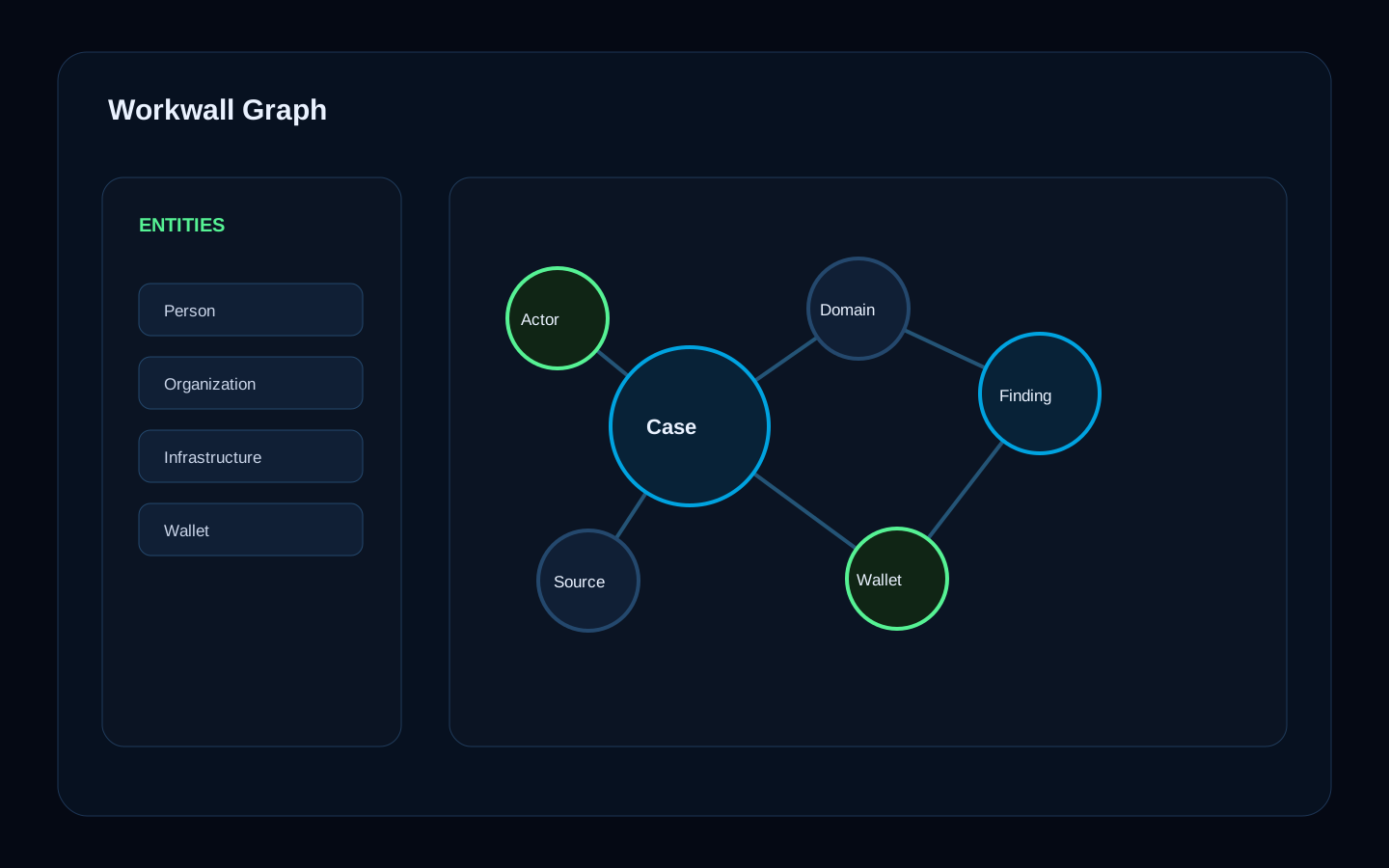
CASE GRAPH
Findings become connected context
What OSINT teams get back
Cleaner signal handling
Treat account hits as evidence candidates, not automatic identity conclusions.
False-positive control
Preserve uncertainty, source quality and review status throughout the workflow.
Connected identity graph
Relate accounts to domains, actors, wallets, reports, locations and notes when supported.
Reviewable output
Produce findings that state what was observed, what was checked and what remains open.
Where account investigations overclaim
Username and account presence tools can return many hits, but a hit is not an identity finding. Without source notes and review, the workflow can create false confidence.
Arqent keeps the review path visible. Analysts can collect signals through governed tools, compare context, record uncertainty and connect only supported findings into the case.
ACCOUNTS
Signal collection
Gather approved account and username signals through governed tools.
QUALITY
False-positive review
Keep uncertainty visible instead of converting hits into unsupported claims.
RELATIONS
Graph context
Connect accounts with domains, actors, wallets, reports and notes.
OUTPUT
Evidence notes
Produce reviewed findings that preserve source context and limitations.
Use cases
Account identity workflow
Use this pattern when account and username signals need controlled review before they influence an investigation.
OSINT
Account and identity investigations
Username and account signals across platforms are compared, false positives are marked, and the remaining hits are connected into an identity graph with source notes.
Explore workflowSystems and sources
What the operator does
Results
Product view
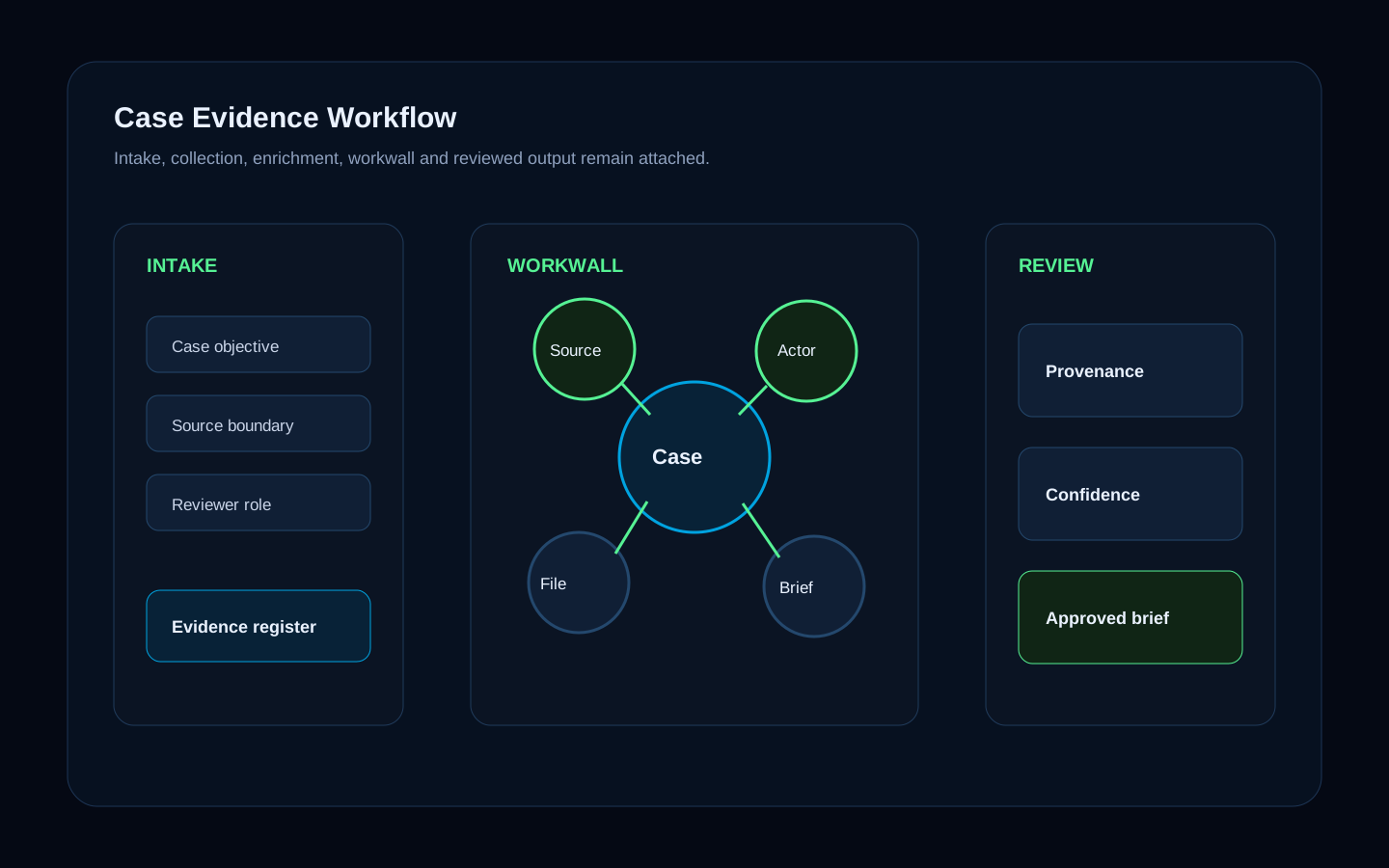
Keep source notes attached to every identity finding
Collection, review, relation mapping and output can remain attached to the case so identity context stays understandable and defensible.
Collect
Approved account and username checks
Review
Source quality and false-positive notes
Connect
Supported relations to the wider case graph
Brief
Evidence notes and limitation context
EVIDENCE TRAIL
Every result stays linked to its sources
Trust model
Built for careful identity assessment
Identity workflows require explicit controls around source quality, uncertainty and downstream claims.
Source quality
Record where a hit came from and how it was checked.
- Source notes
- Signal origin
- Review status
False-positive control
Avoid turning presence into attribution too quickly.
- Confidence context
- Reviewer checks
- No overclaiming
Case relevance
Connect only supported findings into the investigation.
- Case graph relations
- Evidence notes
- Open questions
Output discipline
Make limitations visible in reports and briefings.
- Limits
- Decision trail
- Export context
Map an identity investigation workflow
Define which signals are allowed, how they are reviewed and what output is required.